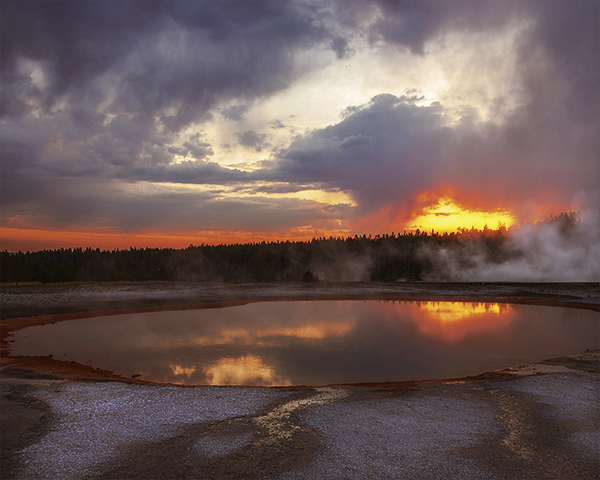
Change and Contrast in Yellowstone
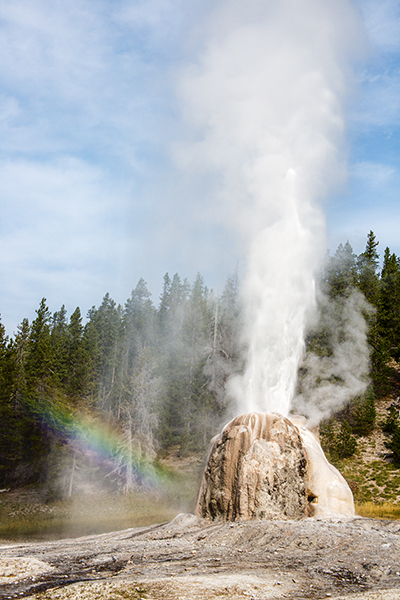
Yellowstone is a wild, changing world of contrasts. At any moment, while in Yellowstone, you can move from a spot of raw, roaring power to peaceful quiet, which is mind-healing. Heat and steam abound from thermal features, but a few steps away, snow can be several feet deep, or water will drip on you from where steam had frozen on the pine needles and is now melting. Water rushes through rapids, tumbles down waterfalls, or cascades over rocks, but just down the way, the water is calm and doesn’t seem to be moving at all.
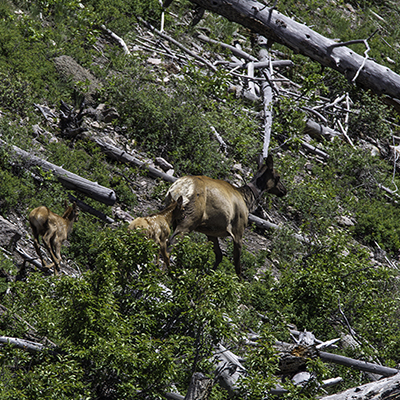
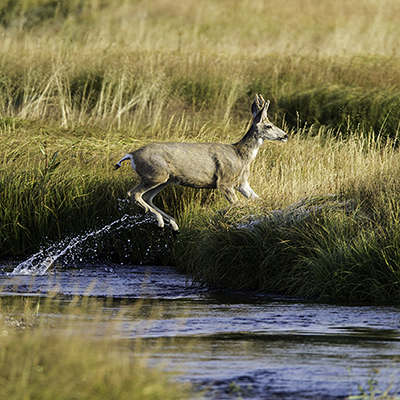
One minute, an elk cow is grazing on the hillside, her twin calves resting at her feet. The next moment, she goes galloping up the mountainside with her family because she smells the black bear below. The bear, on the other hand, never knew they were there.
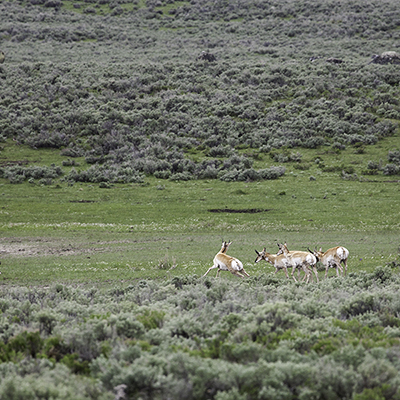
Both change and contrast can occur when a herd of pronghorn moves from grazing quietly to an all-out, rapid retreat once they catch wind of wolves in the area.
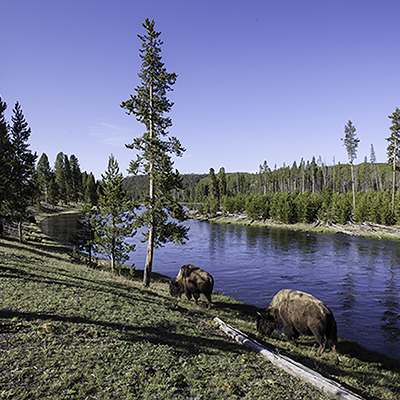
Two bull bison grazing or walking side-by-side may start an intense battle back and forth across the road, with their snorts resounding off the fog. These are a few of the activities you may be blessed with while touring Yellowstone with your family or friends. Change will happen every day and in many forms. As I spent many summers in the park, one of the things I enjoyed most was watching the meadows, valleys, and mountains change. It started with the shaking off of the last winter snow, becoming lush green vegetation, then the golden browns and reds of fall. Regrettably, the snow doesn’t begin until I leave the park in early October.
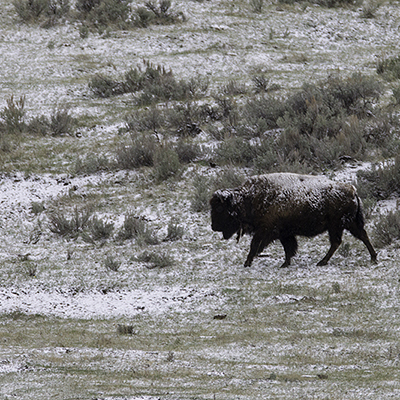
You could also see white bison in the hot geyser basins. White bison, you say? What is it? It’s the brown fur of the bison encrusted with snow or the sinter from the hydrothermal features.
Change is often best seen when you are in the same place for several days or weeks. For example, a friend and co-worker remarked that she was fascinated when, one day, the Upper Geyser Basin was covered in snow, and 24 hours later, there were blooming flowers in the same area. She also remembers how impressive it was to see one flower in bloom one week, and the following week, a different type of plant had sprung up and was blooming in the same area, often changing the color of the same field.
Contrasts are everywhere within the park. Look for contrasts you can find.
Change comes to Yellowstone in various ways; an incomplete list of ways Yellowstone changes includes the following.
- The typical changes you see from season to season.
- The weather changes from day to day and often from minute to minute.
- Geothermal changes.
- Earthquakes, 1000 to 3000, occur annually; I have felt only one in all the years I have been going to Yellowstone. Most are below the level that humans can feel.
- Volcanic action is an “I hope never to see” event. Three catastrophic eruptions have molded the area into what it is today. Lava flows have also altered the park, including the ridges around the Upper Geyser Basin.
- Animal diseases or stressors.
- Natural fires, believe it or not, are a good thing in many situations. Fires caused by human misadventures can be disastrous.
- Changes over time and use also affect what you see.
- Human-generated, not always so good, such as killing off the wolf population in the park in 1926 and encouraging bears to eat at hotel dumps. But man has taken many other actions that have preserved the environment, animals, and wilderness, such as helping save the bison from extinction, restoring bears to their regular diet, and restoring the wolves to the park.
- How we see our world, including Yellowstone, can change as our thoughts and beliefs shift.
Some of these changes will affect you today, and some you may not see until you visit several years later. Some you should hope never to see.
I will say that, concerning my history with the park, I have visited Yellowstone almost 20 times, for several days to five months each time. I saw changes from season to season, or over several years, on each visit. Change is a theme in Yellowstone.
One of the changes I noticed in 2012 was in the Whiskey Flats area. Whiskey Flats was a small pond with typical grasses along its edges. The Whiskey Flats area is now choked with vegetation, and only a little water is visible at the base of the grass. Nature organized this change.
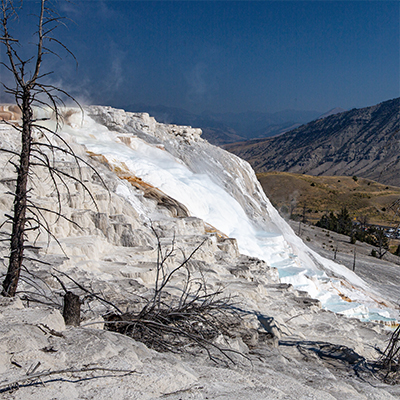
The change that has impacted me the most is the Lower Terraces at Mammoth Hot Springs. In 1976, I captured a picture of the Terraces that I enlarged and hung in my home. I called it my mood picture. Depending on my mood, I would have different amounts of lights on. The lighting then changed the picture's intensity. The picture showed gently rising terraces with vibrant whites, yellows, and browns that glistened with sparkles where sunlight hit the film of water flowing over them. The terraces were balanced with a green row of trees in the background with darkening clouds overhead. I couldn't wait in 2006 to get a similar picture. Imagine my depression when I saw this massive, gray, utterly dry rock formation. I felt physically ill and told Robert, my brother, I didn't want to come back to Mammoth during our visit. An earthquake in the 1990s changed the water flow pattern, leaving behind the gray terraces. Change is always with us. The terraces are starting to come alive again today, and water flows in the Canary Spring and Palette Spring. Those changes occurred because the plumbing system beneath the terraces that supplied the water changed.
One geological change I experienced was the eruption of Ear Spring on Geyser Hill in the Upper Geyser Basin. Ear Spring erupted in 2018 for the first time since 1957. My fellow rangers, the visitors, and I saw a geological change in real time. Features changed water level, new features opened, geyser eruption intervals changed, and other changes occurred. That change was exciting to see, and it was an experience I was humbled by.
On July 23, 2024, Yellowstone experienced another geological change with a large hydrothermal explosion in the Biscuit Basin. The water pressure dropped underground, converting the very hot water to steam. Drop for drop, a drop of water is converted into steam 1600 times its volume. The ground structure could not contain the resulting steam volume, so it broke through at a weak spot, sending a large volume of rocks into the air.
Some of the “changes” you see could be as simple as being at the right place at the right time. I had never seen wolves in the Gibbons Meadows south of the Norris Geyser Basin. In 2012, I saw them there on at least two separate occasions. Nor had I ever seen a bear between Madison Junction and the West Entrance. I did on a later visit. I got lucky; the animals hadn’t changed their behavior. I was just at the right place at the right time.
One often overlooked change is the change that can occur in you, the visitor. A new or renewed enjoyment of nature. The renewed vigor, mental and physical, and enjoyment of life as you connect with nature and the uniqueness of Yellowstone. Experiencing Yellowstone’s beauty, bigness, uniqueness, gentleness, fury, and a Yellowstone adventure all worm their way into your soul, heart, and mind. If you don’t say or think wow multiple times throughout each day you are in Yellowstone, you need Yellowstone to start your healing journey. Come to Yellowstone. I challenge you to resist changing with a dose of Yellowstone.
Health Warning: Yellowstone can be addicting, but it is a kind of addiction that is good for your health. Enjoy it. There are so many different things you can do and experience that each trip will be different and unique in some way. So go on and join the almost 5 million people from around the world who visit the park annually and have your own Yellowstone adventure.
Summary
These changes affect the individual visitor daily, as well as the park's physical features and wildlife that make Yellowstone what it is today. Ever-occurring change is the base of Yellowstone National Park's history.