Hydrothermal Features
Yellowstone National Park as we know it today was created not because of the wildlife or the scenery but because of the 10,000 hydrothermal features early explorers discovered here. You should develop a knowledge base regarding what you will be seeing if you visit Yellowstone, that way you can better understand the park. More importantly, you will be in awe of the park's tremendous forces and beauty.
Here is a brief description of the four features. There is a link at the bottom of the page to a video that presents a more complete description of the features, with many images and clips.
The features are presented here in alphabetical order because you will have your own personal favorite.
Fumaroles
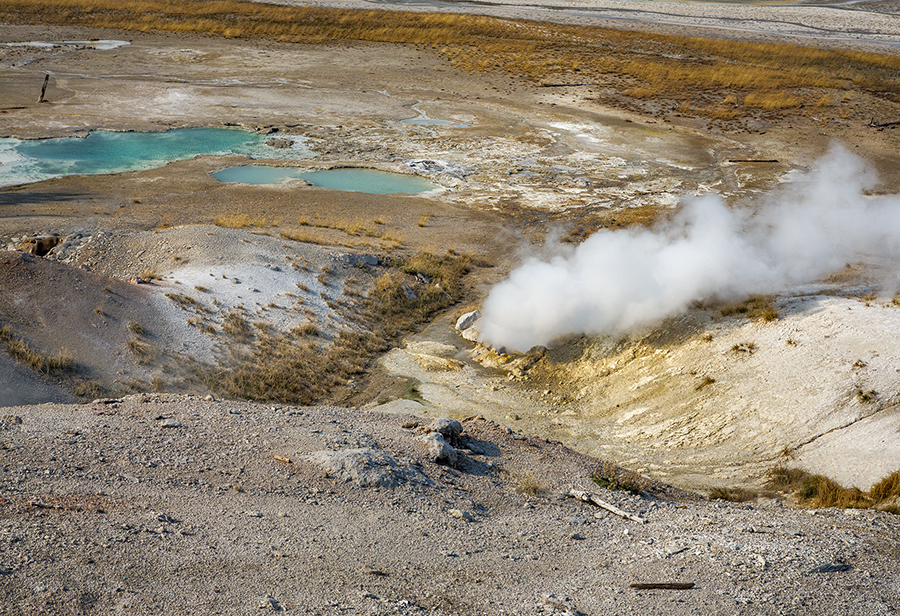
Fumaroles, or steam vents, are the hottest feature in Yellowstone. They can have temperatures up to 280°F (138°C). These features have little water, and because of the extreme heat, the water boils away underground. You may hear hissing or whistling as the gases and steam exit the feature's vent.
Geysers
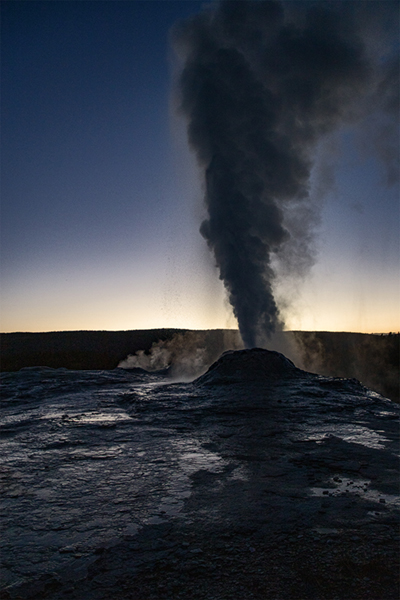
Geysers are hot springs with a constriction in their plumbing system, usually near the surface. The constriction prevents the water from circulating freely, thereby allowing a buildup of heat and pressure. The water becomes superheated deep in the earth near the magma chamber. The temperature is over 400°F (204°C), plus the water does not boil. The pressure from the rocks and water above prevents the water deep in the system from achieving boiling activity. The rising water will eventually boil, releasing steam bubbles. Those bubbles rise and become trapped at the constriction. Some bubbles will soon escape through the constriction, pushing out some water ahead of them. The eruption occurs when the pressure gets low enough to allow the water to pass the constriction. The eruption ceases when no water remains or the system cools.
Hot Springs
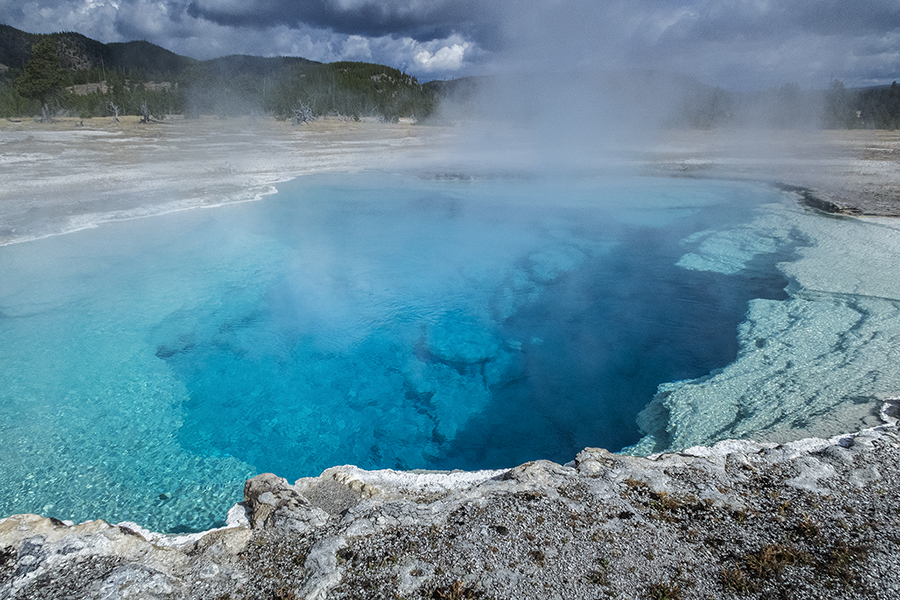
A hot spring is a body of water without a constriction in its plumbing system. Because of circulation in the feature's system, the water fails to reach a temperature high enough to trigger an eruption. Hot springs are the most numerous feature in Yellowstone. Hot springs can be hot, but will not erupt since they have no constriction. Many hot springs have boiling water without eruptions. The boiling point in Yellowstone is 199°F (93°C) due to the elevation. There is less environmental pressure because Old Faithful sits at 7,365 feet. At higher altitudes, water boils at lower temperatures.
Mudpots
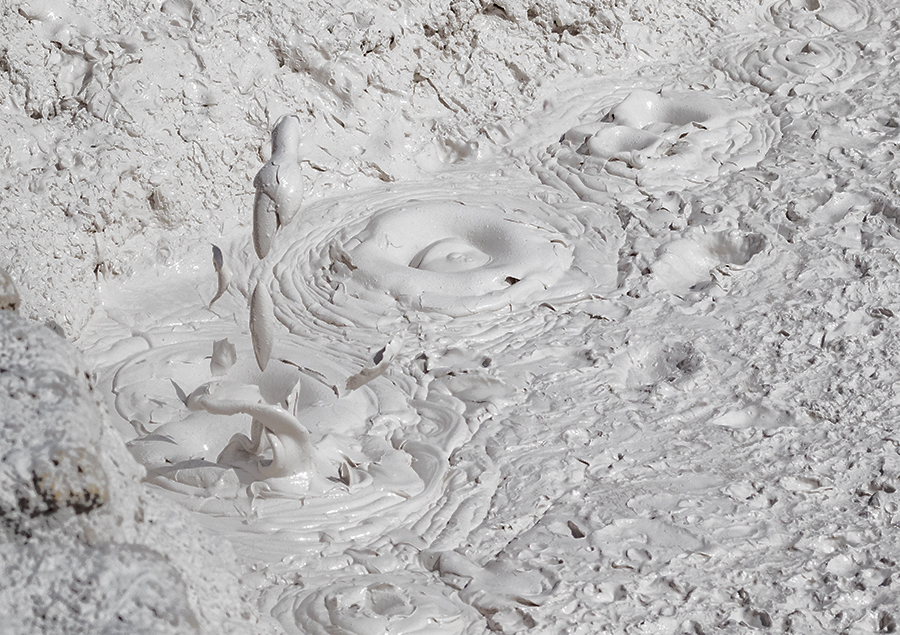
Mudpots are a unique system. The thermal water pushes steam to rise, heating the surface water. Deep in the system is hydrogen sulfide gas. You may smell a rotten-egg odor in the park. That smell comes from the hydrogen sulfide. Microbes consume the hydrogen sulfide for energy and expel the residual as sulfuric acid. That acid breaks down the rock, forming a slurry with the gases, which creates gurgling and rising bubbles. Those gases and bubbles rise to the surface, where all kinds of things can happen depending on how much moisture is in the crater. If the area is soupy, it will look like hot spaghetti water boiling. If the area is dry, like in the late summer, it leaves cracked clay. If the water has the perfect consistency, let the fun begin. Looking at the picture below, you can see multiple locations where gas has come through the surface or is present. On the left, the gases stretched the surface enough to create a dome. The dome kept enlarging until it finally broke apart. Resulting in this beautiful show with sound effects.
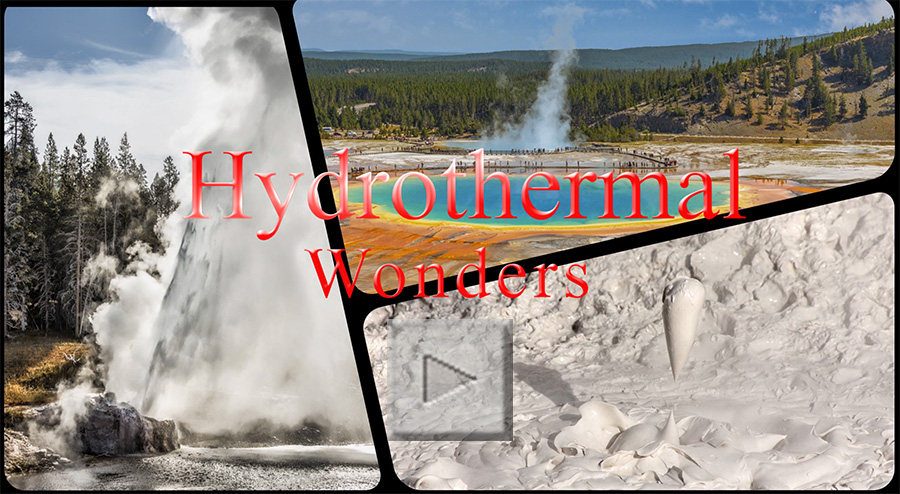
Are you curious to learn more about the fascinating features that make Yellowstone as we know it exist today? Below is your gateway to a 10-minute video loaded with images and facts. Just click on the image. Thank you for visiting this site and that video.